Inside Cowtown Coliseum: 88 Days to Build, a Century of Rodeo
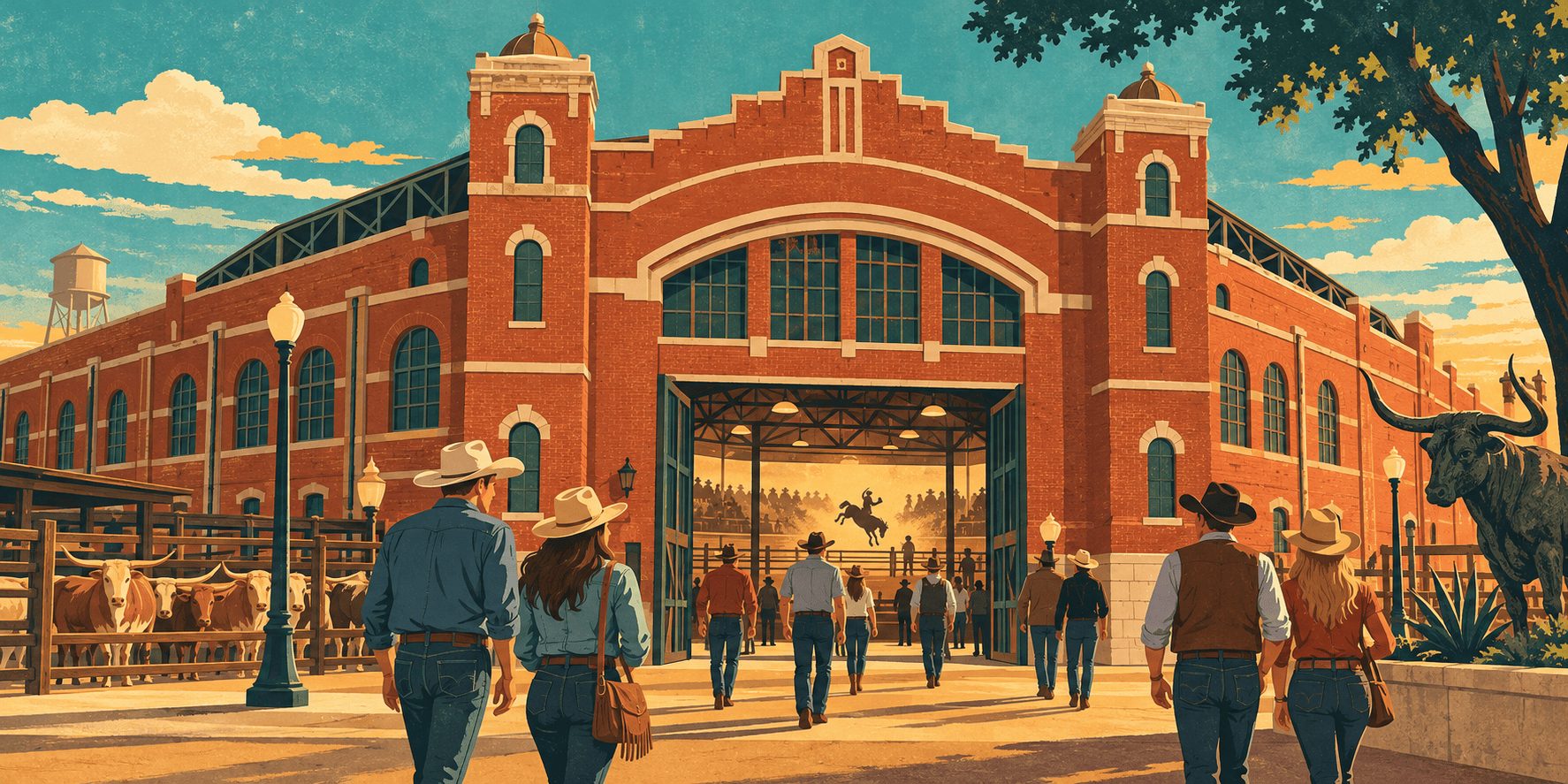
A building completed in 88 working days sounds like a deadline story that would make a modern contractor ask for the project manager’s notes. In the Fort Worth Stockyards, that sprint produced Cowtown Coliseum, a venue that helped turn the city’s livestock economy into a public spectacle. It opened in 1908 as the Grand Coliseum, and ten years later it hosted the world’s first indoor rodeo.
Built for a city that ran on cattle
Construction began in 1907. The Coliseum was ready in time for the 1908 Feeders and Breeders Show, giving the region a large indoor space for livestock exhibitions. At the time, cattle, hogs and sheep moved through the Stockyards in enormous numbers, and the surrounding district needed more than pens and rail sidings. It needed places to conduct business, exhibit animals and bring people together. The Fort Worth Stockyards’ history page traces how the district grew around that livestock business.
That practical origin story gives the Coliseum a different kind of grandeur. It was part of the machinery of a working livestock market, built to serve show season and the buyers, breeders and visitors who came with it. Today, its brick exterior sits among the Exchange Avenue landmarks, and the arena still carries that original purpose in its bones.
The 1918 rodeo changed the show
Cowtown Coliseum became the site of the world’s first indoor rodeo in 1918, according to the venue’s own history. A rodeo brought a competition into the same indoor setting as the livestock show, turning working skills such as riding and roping into an event people could watch together. The Fort Worth Stock Show and Rodeo’s historical timeline describes the first indoor rodeo as a contest, with events that included bucking broncos and steer riding.
The format connected everyday ranch work to public entertainment. A rider needed balance, timing and nerve whether the audience sat in a grandstand or watched from an open field. The indoor arena put the action under a roof and made it a shared experience for the city. Cowtown still gets to claim the result: an early chapter in the history of rodeo as a spectator sport.
A venue with more firsts
The Coliseum’s history kept accumulating. The venue says the first rodeo broadcast live on radio came from there in 1932 on WBAP. It also notes visits from performers and public figures, including Bob Wills, Elvis Presley, President Theodore Roosevelt and President Jimmy Carter. The building is recognized as a Recorded Texas Historic Landmark by the Texas Historical Commission.
Those details make the arena more than an old building with a good event calendar. It has been an exhibition hall, a home for rodeo, a radio broadcast site and a stage for decades of changing entertainment. The Stockyards’ history is full of places that began with a practical job and found a second life as places where people gather. Cowtown Coliseum is one of the clearest examples.
What visitors can experience now
Today, Cowtown Coliseum hosts the Stockyards Championship Rodeo on Friday and Saturday nights, with the event currently scheduled for 7:30 p.m. and doors at 6:00 p.m. Check the venue calendar for current ticket information and event details before planning your night. A rodeo is a live event, so the program and run time can vary.
The Coliseum is also close to Fort Worth Crawling’s Cowboy Pub Crawl meeting point, the Bill Pickett “First Bulldogger” statue at 121 East Exchange Avenue. The adults-only history tour pub crawl runs daily at 3:00 p.m. and 7:00 p.m. and lasts 2 hours and 15 minutes; check the current calendar for holiday exceptions. Guests visit four local bars while a guide shares hidden and hilarious Stockyards stories. Drinks are available to purchase, and ordering alcohol is optional. The specific bar stops shift with availability, while the guide keeps the history and Stockyards setting at the center.
Let the arena keep the story going
Cowtown Coliseum gives the Stockyards a useful point of reference: the place where a working livestock district made room for a crowd, a contest and a new kind of entertainment. Look at the building before or after a rodeo and it is easier to see how business, animals and performance have shared these blocks for generations. If you want a guide to connect the surrounding streets with the rowdier side of local history, book Fort Worth Crawling’s Cowboy Pub Crawl and keep the evening moving.