Fort Worth’s Last Gunfight: Luke Short, Jim Courtright and the White Elephant Saloon
A Showdown on Main Street
Fort Worth’s Wild West reputation was not created by movie scripts. On February 8, 1887, gambler and saloon man Luke Short faced former city marshal Timothy Isaiah “Longhair Jim” Courtright on Main Street. Seconds later, Courtright lay mortally wounded and one of Fort Worth’s most famous gunfights had entered local legend.
Fort Worth Crawling shares the stories behind the Stockyards and its saloons, and this tale deserves careful handling. The White Elephant Saloon was established in 1884, not 1890. The confrontation happened in 1887, and Courtright had served as Fort Worth’s city marshal, not sheriff.
The Men Behind the Legend
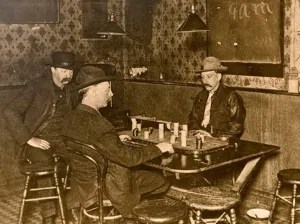
Luke Short was a professional gambler and gunfighter whose travels took him through Dodge City, Tombstone and other Western towns. By the mid-1880s he had an interest in Fort Worth’s White Elephant Saloon, an upscale gambling house and watering hole on Main Street. Bat Masterson, another famous figure of the Old West, was working with Short there in 1887.
Courtright had served as Fort Worth city marshal from 1876 to 1879. He built a reputation as an effective lawman during a turbulent period, then worked in private security and other ventures. Stories later claimed that he demanded protection money from local businesses. Historians disagree about every detail of the dispute, so the cleanest account separates documented facts from colorful retellings.
What Happened on February 8, 1887
Courtright and Short met outside the White Elephant and moved onto Main Street. Their exchange quickly turned deadly. Courtright reached for his gun, but Short fired first. One of Short’s bullets struck Courtright’s gun hand, damaging his thumb and preventing a clean draw. Short continued firing, and Courtright fell.
The shooting lasted only moments. A coroner’s jury ruled that Short acted in self-defense, and he was not prosecuted for murder. The outcome boosted Short’s reputation while ending the life of a man who had once been Fort Worth’s best-known law officer.
Why It Became Fort Worth’s “Last Gunfight”
Calling it Fort Worth’s last gunfight is more nickname than legal category. Violence did not vanish from the city after 1887. The phrase survives because the Short-Courtright duel looked like the classic Western showdown: two famous men, a public street, fast gunfire and a crowd of witnesses.
The timing also mattered. Fort Worth was growing into a railroad and livestock center, and civic leaders wanted order, investment and respectability. The gunfight focused public attention on vice and violence at the edge of downtown, even though the shooting itself did not take place inside Hell’s Half Acre.
The White Elephant Then and Now
The original White Elephant opened downtown in 1884. It was known for gambling, entertainment and a large white-elephant figure that announced the place to passersby. The historic downtown establishment eventually closed.
The White Elephant name returned in the Stockyards in 1970. Today’s saloon at 106 East Exchange Avenue is not the original 1884 building, but it carries the name and Old West atmosphere forward with live music, memorabilia and a lively barroom. Visitors should avoid saying that the current building hosted the 1887 shootout. It did not.
Follow the Story into the Stockyards
The showdown happened downtown, but the Stockyards remain the best place to explore Fort Worth’s saloon culture. You can visit the modern White Elephant, walk the brick streets and hear more stories on Fort Worth Crawling’s Cowboy Pub Crawl. It is a fun way to meet the city beyond the plaque dates and polished legends.
Book the Cowboy Pub Crawl: https://fortworthcrawling.com/stockyards-pub-crawl/