Who Put the Panther in Panther City?
A Nickname Born as an Insult
Fort Worth has collected plenty of nicknames, including Cowtown, Funkytown and Where the West Begins. Panther City has the strangest origin story of the bunch. It began as a jab from Dallas and became a symbol Fort Worth proudly claimed for itself.
Fort Worth Crawling appreciates a tale with a good punch line, especially when Fort Worth gets the last laugh. The story begins during the financial Panic of 1873, when railroad construction stalled before tracks reached the city.
The Railroad Problem
Rail service meant commerce, visitors and growth. Dallas already had it, while Fort Worth waited for the Texas and Pacific Railway to finish its line west. The national economic crisis stopped construction, businesses struggled and some residents left town. Fort Worth suddenly looked less like the next great railroad city and more like a risky bet.
That delay gave a former Fort Worth lawyer named Robert E. Cowart, who had moved to Dallas, an opening for a memorable insult. A story published in the Dallas Herald described Fort Worth as so quiet that a panther could sleep undisturbed on Main Street.
Fort Worth Adopts the Panther
The insult stuck, but not in the way Dallas intended. Fort Worth residents embraced the panther as a sign of toughness and determination. Local leaders and investors pushed to complete the railroad connection, and the first Texas and Pacific train reached Fort Worth in 1876.
Rail service transformed the city. Fort Worth became a major shipping point for cattle and goods, and its population surged. The supposedly sleeping town had awakened, while the panther became a civic mascot instead of a punch line.
Where to Find Panthers Today
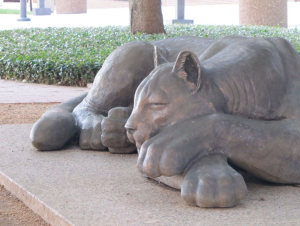
The most famous sleeping panther sculpture rests near the Tarrant County Courthouse in downtown Fort Worth. Other panther images appear in public art, school symbols, neighborhood names and local brands across the city. Panther Island, the area along the Trinity River north of downtown, carries the nickname into a major recreation and development district.
You can also spot panther references at established local businesses such as Panther City BBQ and Panther City Tattoo. Business details change, so this article avoids using closed venues as permanent landmarks.
Was There Really a Panther?
The nickname story has been repeated for generations, but it is best understood as civic folklore tied to a real railroad crisis. The important historical points are clear: Fort Worth’s rail connection stalled after the Panic of 1873, Robert E. Cowart was associated with the sleeping-panther insult, and the railroad arrived in 1876.
Whether an actual panther stretched out on Main Street is another matter. The animal works better as a symbol. Fort Worth turned a rival city’s mockery into a brand that still appears on streets, signs and statues.
Explore the City That Woke Up
Downtown landmarks tell one chapter of Fort Worth’s growth, while the Stockyards tell another. Fort Worth Crawling’s Cowboy Pub Crawl pairs local saloons with stories about cattle drives, railroads, outlaws and the people who shaped the city.
Book the Cowboy Pub Crawl: https://fortworthcrawling.com/stockyards-pub-crawl/