Fort Worth Stockyards Cattle Drive: Times, History and Visitor Tips
How Fort Worth Became Cowtown
Fort Worth’s cowboy image is more than a costume. The city grew at the meeting point of cattle trails, railroads, stock pens and meatpacking plants. The Fort Worth Stockyards preserve that story in brick streets, historic buildings and a daily procession of Texas Longhorns.
Fort Worth Crawling guides visitors through this district with saloon stops and local history. Before you raise a glass, it helps to understand how a rough cattle stop became one of Texas’s best-known visitor destinations.
Cattle Trails and the Railroad
After the Civil War, drovers moved millions of cattle north from Texas toward railheads in Kansas. Fort Worth became an important stop because it sat along the trail network near the Trinity River. Cowboys could rest, buy supplies and prepare for the long journey ahead.
The Texas and Pacific Railway reached Fort Worth in 1876. Rail access accelerated the cattle trade and connected the city to national markets. Early livestock pens appeared near the tracks, but the Union Stock Yards were chartered in 1887 and opened for business in 1889. That distinction matters: the Stockyards did not open in 1876 simply because the railroad arrived that year.
The Fort Worth Stockyards Company
Local livestock facilities struggled to compete with established markets until Boston investor Greenlief W. Simpson and his partners purchased the Union Stock Yards on April 27, 1893. They renamed the operation the Fort Worth Stockyards Company and attracted major meatpackers to the area.
Swift and Armour opened large packing plants in 1903. The plants created thousands of jobs and helped make Fort Worth a powerful livestock center. Hotels, saloons, shops and entertainment followed the workers, buyers, ranchers and cowboys who poured into the district.
Boom, Decline and Preservation
The Stockyards reached its commercial peak in the first half of the 20th century. Changes in trucking, refrigeration and the meatpacking industry eventually reduced the importance of centralized livestock markets. The Armour plant closed in 1962, and Swift followed in 1971.
Fort Worth residents and preservationists recognized that the district’s buildings and stories were worth saving. The Fort Worth Stockyards Historic District was listed on the National Register of Historic Places in 1976. Historic structures found new lives as restaurants, museums, shops, music venues and attractions.
The Fort Worth Herd Cattle Drive
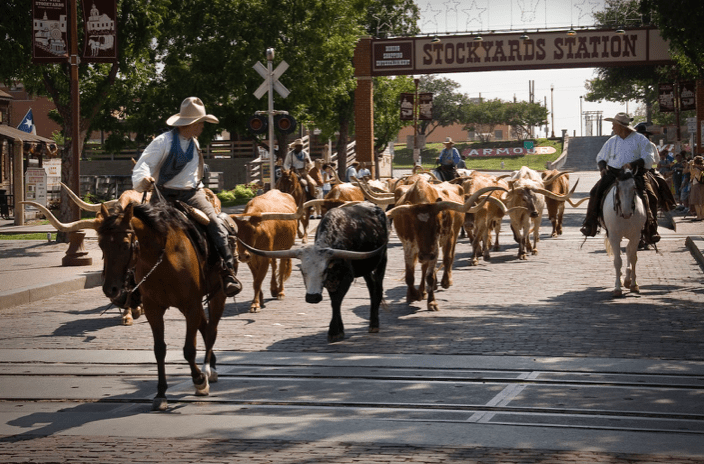
Today the Fort Worth Herd travels along East Exchange Avenue at 11:30 a.m. and 4 p.m. daily, weather permitting. The event is free and billed as the world’s only twice-daily cattle drive. The best viewing area is in front of the Livestock Exchange Building at 131 East Exchange Avenue.
Arrive at least 30 minutes early because street closures and crowds affect parking. Do not step into the street or approach the animals. The drovers manage the Longhorns, and spectators should follow their directions. The drives do not operate on certain holidays and can be canceled for weather, so confirm the schedule at https://www.fortworthstockyards.org/faq/cattle-drive-times-locations.
Make a Day of the Stockyards
Beyond the Herd, visitors can tour historic buildings, see rodeo action at Cowtown Coliseum, hear live music, shop for Western gear and visit the Texas Cowboy Hall of Fame. Parking is available in several paid lots and garages, with rates that vary by location and event.
End your day with stories that fit the setting. Fort Worth Crawling’s Cowboy Pub Crawl visits Stockyards saloons while a local guide explains the cattlemen, gamblers, outlaws and entrepreneurs behind the neighborhood.
Book the Cowboy Pub Crawl: https://fortworthcrawling.com/stockyards-pub-crawl/